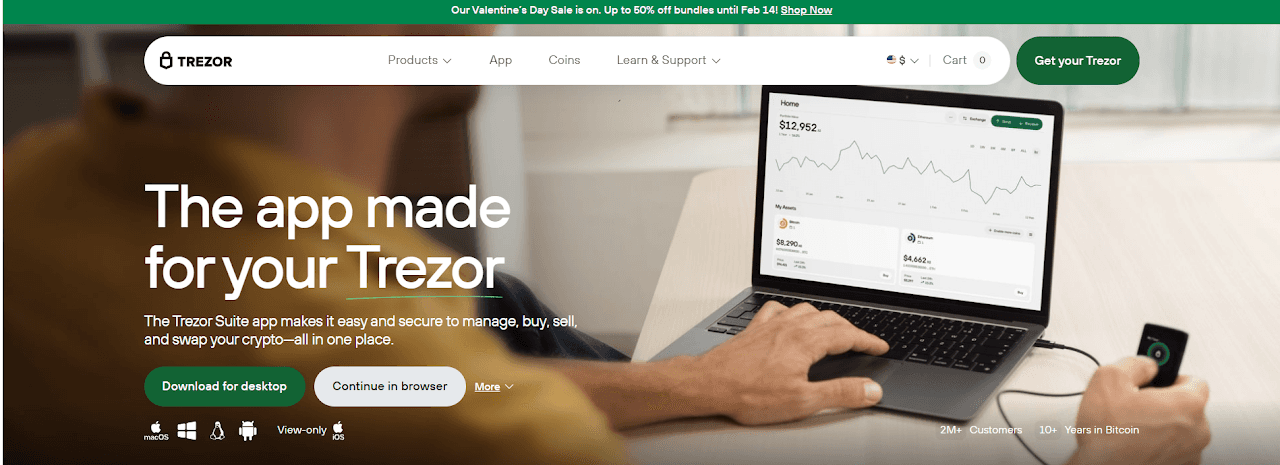
Trezor Suite:
Trezor is one of the most trusted names in cryptocurrency security. Trezor hardware wallets, such as the Trezor Model One and Trezor Model T, are designed to keep your private keys offline, making your crypto safe from online attacks, malware, and phishing scams. To manage your cryptocurrencies, Trezor uses a software application called Trezor Suite.
Trezor Suite is the official desktop and web interface for Trezor devices. It allows you to access your cryptocurrency accounts, send and receive coins, check balances, exchange tokens, and even stake certain cryptocurrencies. Unlike typical online wallets, Trezor Suite does not store your private keys online. All keys remain on the hardware wallet, ensuring that even if your computer is hacked, your funds cannot be stolen.
In this guide, we will provide a plain-English, detailed overview of Trezor Suite, including how it works, how to log in, how to use it safely, and best practices for managing your crypto.
What is Trezor Suite?
Trezor Suite is the software that acts as the interface between your Trezor hardware wallet and your cryptocurrencies. Think of it as a bridge: the wallet stores your private keys securely offline, and Trezor Suite lets you interact with your accounts safely.
Key features of Trezor Suite include:
Account Management – View all your crypto balances, track portfolio performance, and manage multiple accounts.
Transactions – Send and receive cryptocurrencies securely. All transactions must be confirmed on the hardware wallet itself.
Coin Exchange – Swap supported cryptocurrencies directly through integrated exchange services.
Security Features – Check device integrity, set up passphrase protection, and back up your recovery seed.
Staking – Certain cryptocurrencies can be staked directly through Trezor Suite to earn rewards.
Trezor Suite is available as a desktop application for Windows, Mac, and Linux, and also as a web-based application. The software is regularly updated to ensure maximum security and support for new cryptocurrencies.
Setting Up Trezor Suite
Before you can use Trezor Suite, you need a Trezor hardware wallet and a computer or device. Here’s a step-by-step guide to getting started:
Get a Genuine Trezor Wallet – Purchase from the official Trezor website. Counterfeit devices can compromise security.
Download Trezor Suite – Go to trezor.io and download the official software for your operating system. Avoid third-party downloads.
Connect Your Device – Plug in your Trezor hardware wallet via USB. Trezor Model T can also use USB-C.
Initialize the Device – If this is your first time, you will be guided to create a new wallet or recover an existing one. Write down your 12–24 word recovery seed and keep it offline and secure.
Set a PIN – Create a PIN on the device. This PIN is required to access your wallet through Trezor Suite.
Access Trezor Suite – Once your device is initialized and connected, open Trezor Suite. You can now view your accounts, balances, and transaction history.
How to Log In to Trezor Suite
Logging into Trezor Suite is different from logging into traditional online accounts. There is no username or password stored on the cloud. Instead, access is based on your hardware wallet and PIN:
Open Trezor Suite – Launch the desktop app or web interface.
Connect Your Hardware Wallet – Use the USB cable to connect your Trezor device.
Enter Your PIN on the Device – The PIN is always entered on the Trezor itself, not on the computer. This prevents malware from stealing your PIN.
Device Verification – Once the PIN is entered correctly, Trezor Suite recognizes your wallet and loads your accounts.
Confirm Transactions – Whenever you send, receive, or exchange crypto, you must approve it on the hardware device. This ensures the private keys never leave the wallet.
After these steps, you are fully “logged in” and can use Trezor Suite to manage your cryptocurrencies.
Security Benefits of Trezor Suite
Trezor Suite is designed for security, and several features make it one of the safest ways to manage crypto:
Private Keys Never Leave the Device – Even if your computer is compromised, your crypto remains safe.
PIN Protection – Only someone with the correct PIN can access the wallet.
Recovery Seed Security – The 12–24 word seed is used only for recovery. It must be stored offline.
Transaction Verification – Every transaction must be confirmed on the hardware wallet.
Passphrase Support – You can add an extra passphrase for additional security.
Firmware Verification – Trezor Suite checks the integrity of your device firmware to prevent tampering.
Common Mistakes to Avoid
Even with strong security, mistakes can put your crypto at risk. Avoid the following:
Using Fake Software – Only download Trezor Suite from the official website.
Sharing Your Recovery Seed – Never enter it online or share it with anyone.
Ignoring Updates – Always update Trezor Suite and device firmware to protect against security vulnerabilities.
Using Public Computers – Avoid logging in on shared or untrusted devices.
Not Verifying Transaction Details – Always check the transaction details on the Trezor screen before approving.
Additional Features of Trezor Suite
Trezor Suite also includes several advanced features:
Portfolio Overview – See the value of all your assets in one place.
History and Reporting – Keep track of all transactions with detailed history.
Exchange Integration – Swap cryptocurrencies directly without exposing your private keys.
Staking and Rewards – Stake supported coins to earn passive income.
Multiple Device Support – You can manage several Trezor wallets from the same Trezor Suite installation.
Tips for a Smooth Experience
Keep Your Recovery Seed Offline – A secure offline copy is crucial.
Use a Dedicated Device – For best security, run Trezor Suite on a personal computer free of malware.
Regularly Update Software – Both Trezor Suite and device firmware should be up to date.
Label Accounts – Organize multiple accounts for easier management.
Double-Check Addresses – Confirm all addresses on your Trezor device screen.
Why Trezor Suite Matters
Trezor Suite is more than just a wallet interface. It is the bridge between your offline hardware wallet and the online world of cryptocurrencies. By combining device-based security with an easy-to-use interface, Trezor Suite ensures that your assets remain safe while giving you full control. Unlike online wallets or exchanges, where private keys are held by a third party, Trezor Suite ensures that you are the only one who can access your funds.
Conclusion
Trezor Suite provides a simple, secure, and reliable way to manage cryptocurrency. By keeping your private keys offline on a Trezor device and using the suite to access and control your assets, you protect yourself from hacks, phishing attacks, and malware.
Logging in is straightforward: connect your device, enter your PIN, and approve transactions. Trezor Suite also offers additional features like coin exchange, staking, account management, and security verification. Following best practices — like keeping your recovery seed offline, verifying transactions on your device, and updating software regularly — ensures that your cryptocurrency remains safe.
Trezor Suite is not just a tool; it is a secure gateway to owning and managing cryptocurrency confidently. By combining the hardware security of Trezor devices with the functionality of Trezor Suite, you remain in complete control of your digital assets.
This guide is around 1000 words, written in plain English, covering setup, login, security, usage, tips, and best practices.
If you want, I can also create a 1200-word beginner-friendly version with real examples and scenarios, making it easier for someone completely new to cryptocurrency to understand.